
Home Renovation in Dubai: The Complete Guide
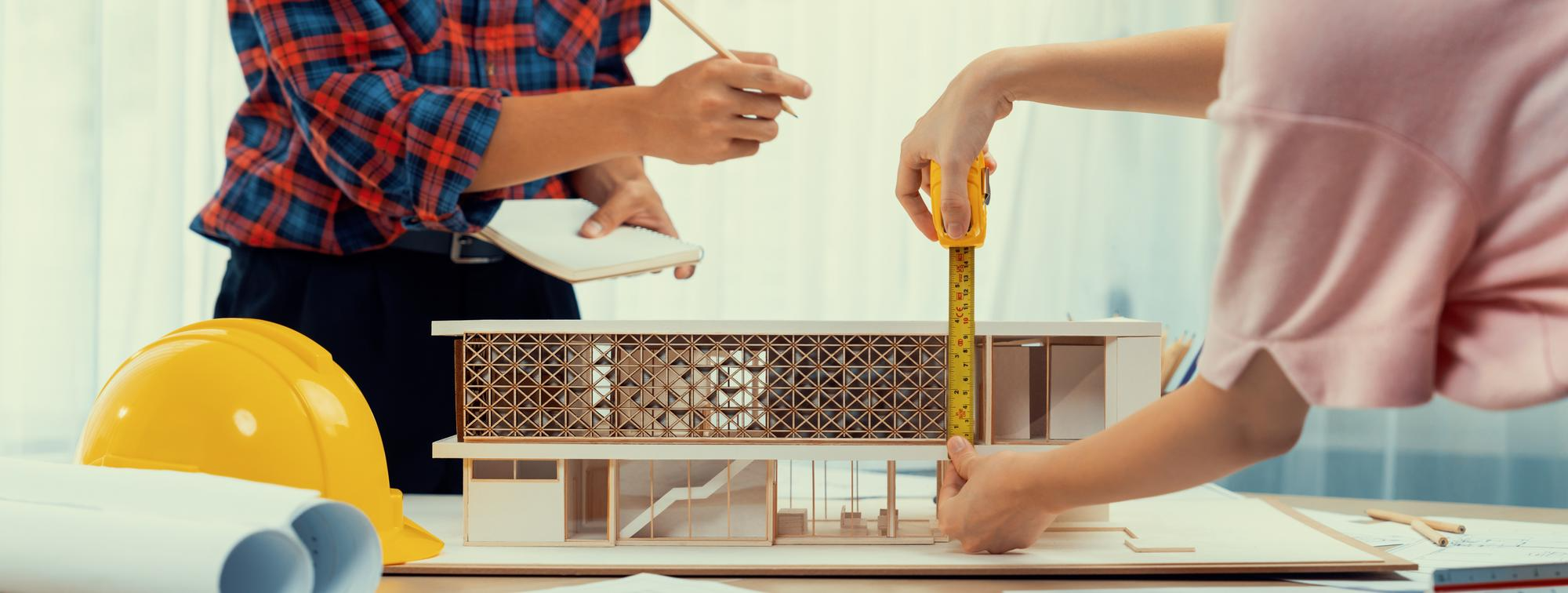
Renovating a home in Dubai is a considerably different undertaking from what most property owners anticipate. The city’s regulatory framework is thorough, the approval requirements vary by community and property type, and the gap between a well-managed renovation and a poorly executed one is measured not just in finish quality but in compliance, timeline, and long-term value.
This guide covers everything a homeowner needs to know before a single wall is touched from understanding permit requirements and realistic costs, choosing the right firm and knowing what to expect at each stage of the process.
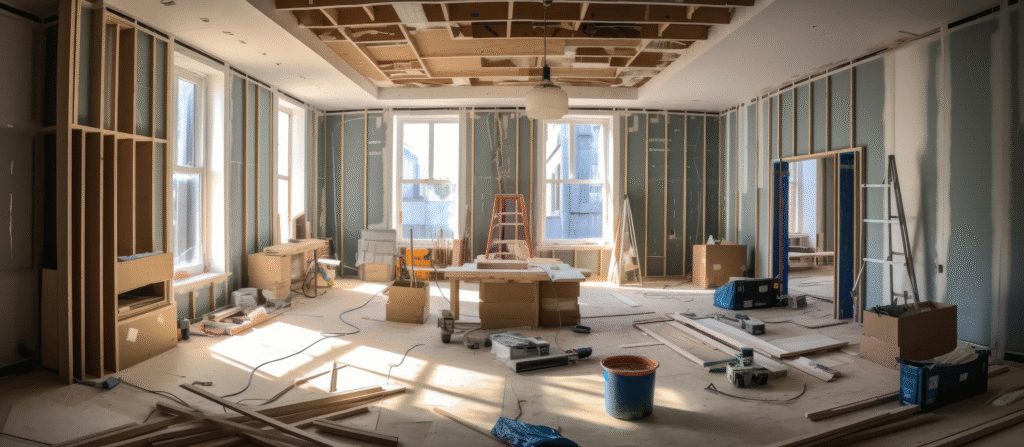
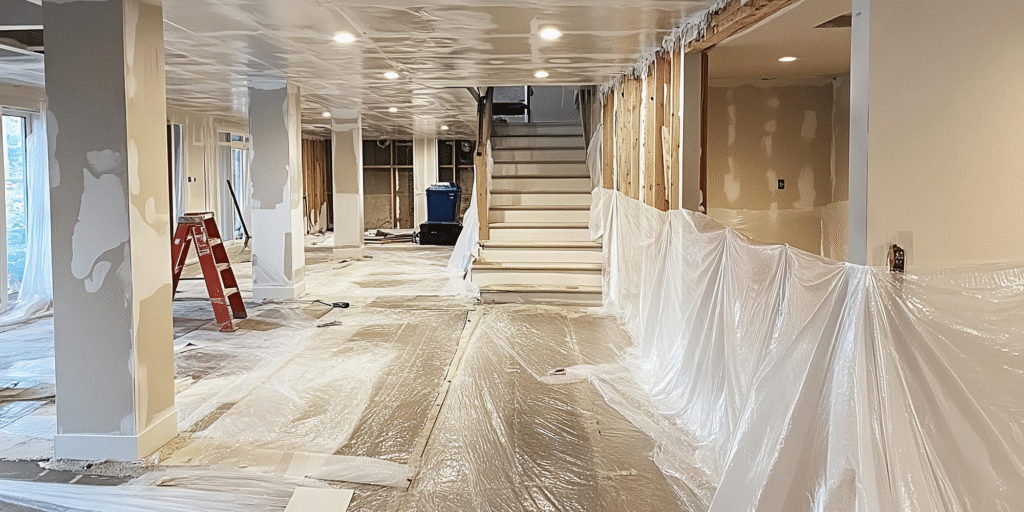
Before You Begin: What Home Renovation in Dubai Actually Involves
The term renovation encompasses a wide spectrum of work. In Dubai’s regulatory context, the distinction between a cosmetic refresh and a structural overhaul carries real consequences of different permit requirements, different approval timelines, and different levels of professional involvement.
Dubai’s renovation process is overseen by two primary regulatory authorities depending on your locality. For properties in designated freehold areas, approvals are obtained from the Dubai Development Authority. For non-freehold areas, Dubai Municipality is the relevant authority.
Understanding which authority governs your property and what they require is the first decision to make, not an afterthought.
Permits: What Requires Approval and What Does Not
A common misconception among homeowners is that cosmetic work requires no regulatory engagement whatsoever. This is broadly true for surface-level changes, but the line shifts quickly once structural, MEP, or external elements are involved.
Starting renovation work without a valid permit can lead to penalties, stop-work notices, and project delays making an understanding of approval requirements a critical part of renovation planning.
Here is a practical reference for the most common renovation scopes:
| Renovation Scope | Permit Required | Approving Authority |
| Repainting, flooring, fixture replacement | Generally none | – |
| Kitchen or bathroom remodel (no structural change) | Dubai Municipality notification | Dubai Municipality |
| Structural modifications (walls, layout changes) | Full permit mandatory | Dubai Municipality / DDA |
| MEP works (electrical, plumbing, HVAC) | Permit + utility authority sign-off | Dubai Municipality + DEWA |
| Façade or external alterations | Community developer NOC + municipal permit | Developer + Dubai Municipality |
| Full villa renovation (structural, MEP, exterior) | Multiple simultaneous submissions | All relevant authorities |
Dubai Municipality approval timelines vary by project type. Minor works permits typically take between five and ten working days, while major works permits require ten to fifteen working days. Complex construction projects may take longer. Engaging a firm with in-house approvals capability rather than one that outsources submissions remains the most reliable way to keep this process on schedule.
What Does Home Renovation Cost in Dubai?
Cost is the question every homeowner asks first, and the honest answer is that it depends on scope, finish level, and property type more than any single variable.
Home renovation in Dubai costs between AED 800 and AED 3,500 per square foot depending on scope. Villa renovations tend to sit at the higher end of this range, given that villas often require more extensive work larger spaces, private MEP systems, older air conditioning ducting, and outdoor considerations.
For a more granular reference:
| Renovation Type | Estimated Cost Range (AED) |
| Cosmetic refresh (paint, flooring, fixtures) | 800 – 1,200 per sq. ft. |
| Partial renovation (kitchen, bathrooms, MEP upgrades) | 1,200 – 2,000 per sq. ft. |
| Full interior overhaul | 2,000 – 3,500 per sq. ft. |
| Luxury finish (premium materials, bespoke design) | 3,500+ per sq. ft. |
| Permit costs (minor works) | AED 500 – 2,000 |
| Permit costs (major works) | AED 2,000 – 15,000 |
Beyond the core renovation budget, homeowners should account for hidden costs approvals, temporary accommodation, and custom design elements which can accumulate considerably. Building in a contingency of ten to twenty per cent is advisable.
How AAA Approaches Home Renovation
AAA’s work in home renovation is built on four decades of multidisciplinary practice in Dubai. Where most renovation firms operate as contractors managing trades, AAA functions as a complete design and engineering authority architecture, interior design, MEP, civil engineering, and regulatory approvals coordinated within a single practice.
This matters most when a project involves more than one discipline. A structural modification that also requires MEP rerouting and a community developer NOC is not a linear process. It requires simultaneous coordination across design, engineering, and regulatory submissions managed by professionals who understand how each element affects the others.
For homeowners undertaking a renovation of any meaningful complexity, that level of integrated capability is the difference between a project that runs to plan and one that does not.
The Renovation Process: Stage by Stage
Understanding what happens at each phase prevents the most common source of homeowner frustration not the work itself, but the uncertainty around it. A well-managed home renovation in Dubai follows a consistent sequence, regardless of scale.
Stage 1 Consultation and Scope Definition
The project begins with an honest assessment of what the property requires, what the homeowner wants, and where the two align within budget. This stage should produce a written scope of works before anything else is discussed.
Stage 2 Design and Documentation
Architectural drawings, interior layouts, and MEP schematics are developed and signed off. No permit submission is possible without complete, compliant documentation which is why rushing this stage invariably costs more time than it saves.
Stage 3 Approvals and Permits
Submissions are made to the relevant authorities. For complex villa renovations, this may involve Dubai Municipality, a community developer, and utility authorities simultaneously. Missing approvals or incorrect documentation are among the most common causes of project delays at this stage.
Stage 4 Site Mobilization and Construction
Work begins once all permits are in hand. A structured site program with clearly defined milestones keeps trades coordinated and the project moving without avoidable stoppages.
Stage 5 Inspections and Handover
Regulatory inspections are conducted at defined intervals. Final handover includes completion certificates, as-built documentation, and where applicable utility reconnection sign-off.
Four Questions to Ask Your Renovation Firm Before Signing
Regardless of which firm you engage, these four questions will reveal more about their actual capability than any portfolio will.
1. Do you handle regulatory approvals in-house?
Outsourced approvals mean limited control over the single most common cause of delays.
2. Can you provide references from completed projects of a comparable scale?
Completed projects not renderings are the only credible evidence of delivery capability.
3. How are variations documented and priced?
Scope changes are inevitable on complex renovations. A firm without a formal variation process exposes the homeowner to uncontrolled cost increases.
4. Who is the single point of contact for the project?
Accountability requires a name, not a department.
Frequently Asked Questions
Do I need a permit for interior renovation in Dubai?
It depends on the scope. Cosmetic changes paint, flooring, fixtures generally do not require a permit. Any work involving structural changes, MEP systems, or external alterations requires formal approval from Dubai Municipality or the relevant community developer.
Can I live in my home during renovation?
For cosmetic or partial renovations, most homeowners remain in the property, albeit with some disruption. Full structural renovations or complete MEP overhauls typically make occupation impractical for the duration of the works.
How do I handle renovation in a community like Palm Jumeirah or Dubai Hills?
Community developer approval is required in addition to Dubai Municipality permits. Façade changes, external modifications, and structural works all fall within this requirement. Engaging a firm with existing relationships with these authorities significantly reduces submission and response timelines.
What is regularization, and do I need it?
Regularization is the process of obtaining approvals for works that were completed without proper authorization. It is more common than most homeowners realize, particularly in older properties or following a resale purchase. Left unaddressed, unapproved works carry legal and financial risk and affect a property’s marketability. AAA manages regularization as part of its approvals practice, bringing existing structures into full compliance with current Dubai regulations.
The Right Firm Changes Everything
Home renovation in Dubai rewards preparation and penalizes shortcuts. The homeowners who navigate the process with the least disruption are invariably those who engaged the right firm at the outset not after a permit rejection or a contractor dispute mid-project.
AAA brings together architecture, interior design, MEP, civil engineering, and regulatory approvals under one practice. For homeowners who want a renovation managed with precision, delivered with expertise, and compliant from the first submission to the final inspection AAA is the consultancy built for exactly that.
